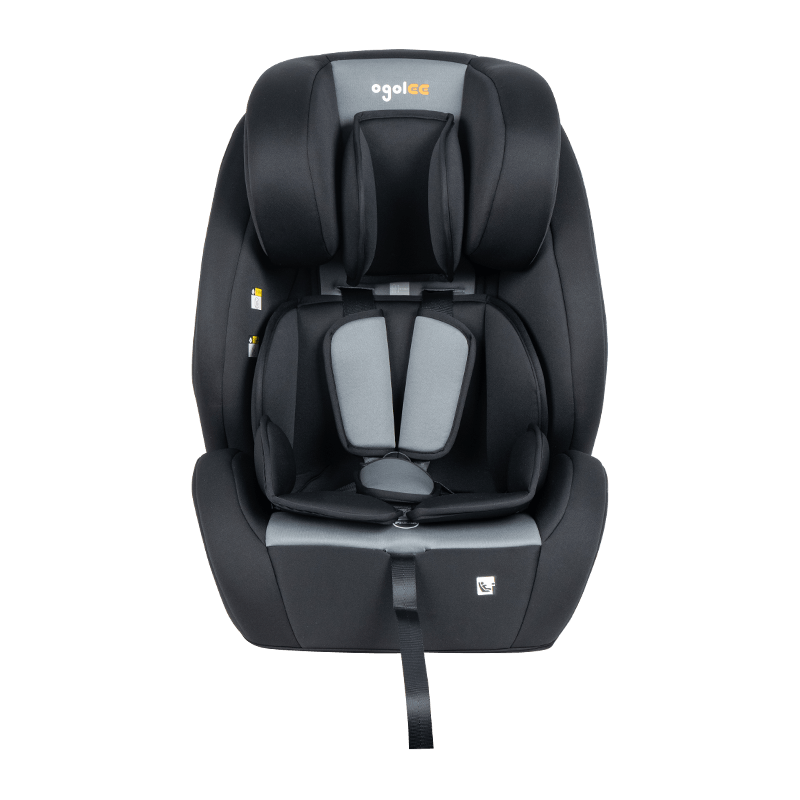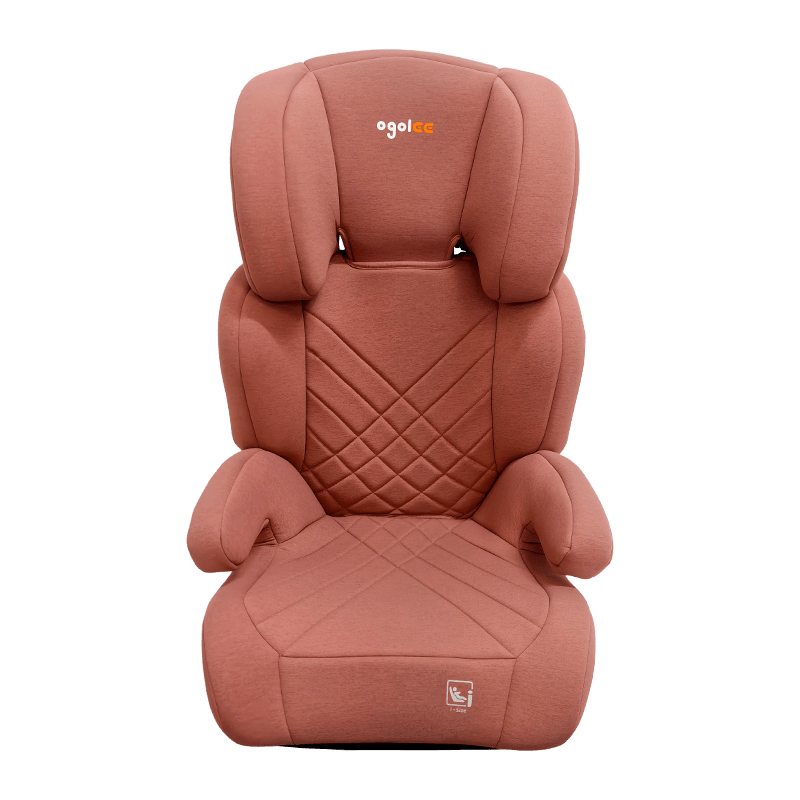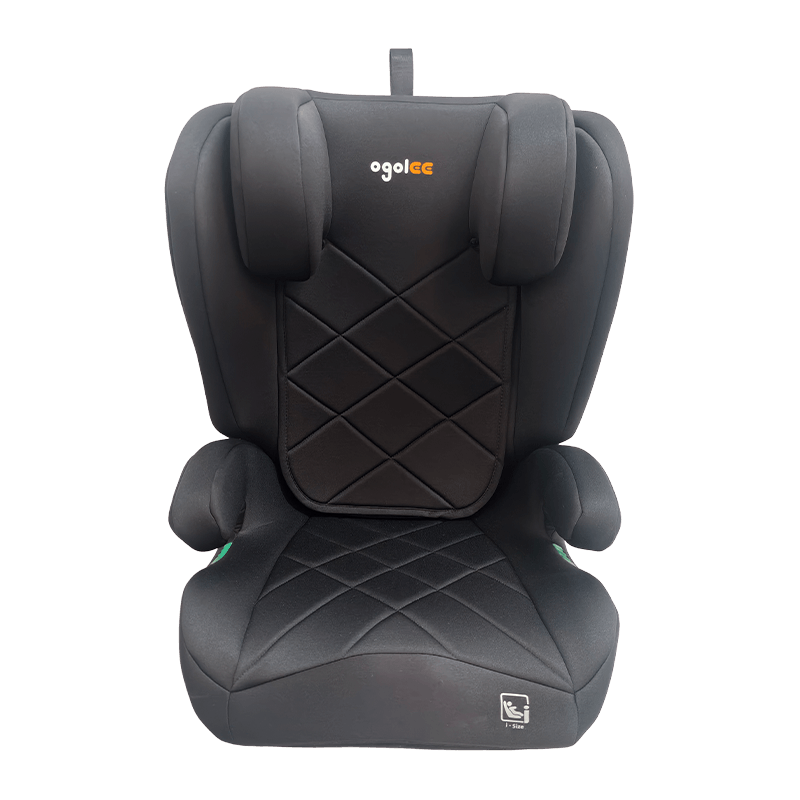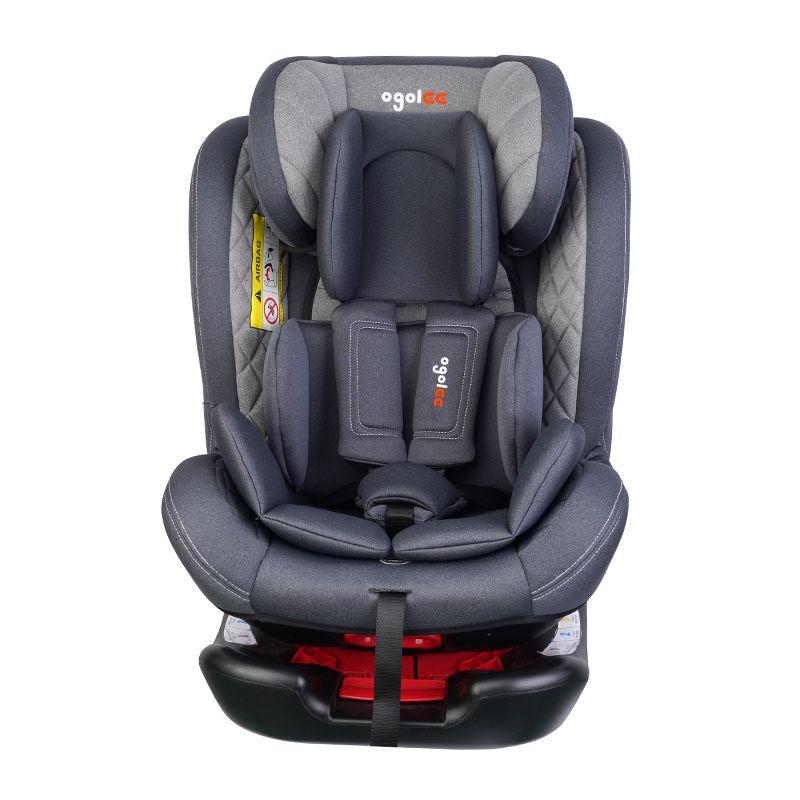


The smallest car seats for infants are compact infant-only bucket seats with a base width typically between 15 and 17 inches and an installed depth of 25 to 28 inches — significantly narrower and shallower than standard infant seats, which commonly measure 17 to 19 inches wide. These slim-profile seats are designed specifically for compact vehicles, small back seats, families needing to fit multiple seats side by side, or parents who regularly use ride-share and taxi services where a lightweight, portable seat is essential. This guide explains exactly which dimensions matter and why, how to evaluate safety alongside size, what features distinguish quality compact infant seats, and how to determine whether a small-profile seat is the right choice for your specific situation.
Why Infant Car Seat Size Matters More Than Most Parents Realize
Infant car seat dimensions affect not just vehicle fit but installation quality, sibling seating, ride-share viability, and the physical safety of the install itself — yet the overwhelming majority of car seat shopping focuses on weight limits and safety ratings while ignoring the physical footprint entirely.
According to a 2021 study published in the Journal of Pediatric Health Care, an estimated 59% of child car seats are installed incorrectly in the United States, with improper installation being one of the leading contributors to car seat failure in crashes. One of the most common installation errors — the seat being installed at an unsafe angle or with insufficient belt tension — is directly linked to the seat not fitting properly in the vehicle's available space. A car seat that is too wide for a vehicle's back seat often cannot be positioned squarely against the seat back, compromising the installation angle and harness geometry.
Beyond safety, the physical dimensions of an infant car seat determine whether a family can realistically travel together. The American Academy of Pediatrics (AAP) strongly recommends that infants remain rear-facing until they reach the maximum rear-facing weight or height limit of their seat — a guideline that means the car seat's dimensions need to work in your specific vehicle for potentially two or more years.
The global infant car seat market was valued at USD 4.7 billion in 2023 and is expected to reach USD 7.1 billion by 2031 (Allied Market Research, 2024), with compact and travel-friendly designs identified as the fastest-growing product subcategory, driven by increasing urban living, smaller vehicle ownership, and the growth of ride-share travel.
Which Dimensions Actually Define a "Small" Infant Car Seat?
Three measurements define whether an infant car seat qualifies as compact: seat width, installed depth (front-to-back footprint with the base installed), and overall weight — and all three matter equally for different reasons.
Seat Width
Seat width is the most important dimension for families fitting multiple car seats side by side or using compact vehicles. Standard infant car seats measure 17 to 19 inches wide at their widest point (typically at the harness shoulder or wing level). Compact infant seats measure 15 to 17 inches wide. In a typical mid-size sedan back seat measuring 52 to 56 inches across, a standard 18-inch seat paired with an average toddler seat (20 inches) leaves only 14 to 18 inches for a third seat or adult passenger — often impossibly tight. Two compact 16-inch seats in that same space leave 20 to 24 inches available, making three-across seating genuinely achievable.
Installed Depth (Front-to-Back Footprint)
Installed depth measures how far the seat extends from the vehicle seat back toward the front passenger seat when rear-facing. This is particularly critical in compact cars and for passengers in the front seat. Standard infant seats installed rear-facing typically have an installed depth of 28 to 34 inches. Compact infant seats achieve installed depths of 24 to 28 inches, which can mean the difference between the front passenger being able to sit comfortably or being pushed forward uncomfortably close to the dashboard.
Seat Weight (Without Base)
The carry weight of an infant seat — the weight of the seat shell alone, without the base — determines how practical it is to carry the seat with a sleeping infant. Standard infant seats weigh 8 to 11 pounds without the base. Compact and lightweight models weigh 5.5 to 8 pounds. When carrying a 10-pound newborn in a seat weighing 9 pounds, the parent is supporting nearly 20 pounds on one arm — a weight that becomes significant during even short walks from a parking garage or through an airport. Reducing seat weight by 2 to 3 pounds has a meaningful ergonomic benefit over months of daily use.
| Measurement | Standard Infant Seat | Compact Infant Seat | Why It Matters |
| Seat width | 17–19 inches | 15–17 inches | Side-by-side fit, three-across seating |
| Installed depth (rear-facing) | 28–34 inches | 24–28 inches | Front seat passenger legroom |
| Weight (seat shell only) | 8–11 lbs | 5.5–8 lbs | Carry comfort, ride-share use, travel |
| Base width | 15–18 inches | 13–16 inches | Vehicle seat compatibility, side-by-side fit |
| Overall height (installed) | 24–30 inches | 22–27 inches | Headliner clearance in low-roofline vehicles |
Table: Key dimension comparisons between standard and compact infant car seats, with explanation of why each measurement matters in real-world vehicle use.
How Safety Standards Apply to Compact Infant Car Seats
All infant car seats sold legally in the United States must meet the same federal safety standards regardless of their size — a compact seat is not inherently less safe than a standard seat if it passes the same mandatory crash tests.
In the US, infant car seats must comply with Federal Motor Vehicle Safety Standard (FMVSS) 213, administered by the National Highway Traffic Safety Administration (NHTSA). FMVSS 213 mandates that every car seat — regardless of its size category, weight, or price point — must withstand a 30 mph frontal barrier crash test and a dynamic roll test, with the child restraint preventing the test dummy from exceeding specified head excursion limits and chest acceleration thresholds.
In Europe, the equivalent standard is UN Regulation 129 (i-Size), which additionally requires a side-impact test that FMVSS 213 currently does not mandate. Seats carrying the i-Size designation have therefore passed an additional dynamic lateral impact test, offering documented protection against the type of crash that causes approximately 25% of all child vehicle occupant injuries (European Road Safety Observatory, 2022).
A compact infant seat that is certified to FMVSS 213 has passed the same crash test as a larger seat. However, a smaller seat shell may have a lower maximum weight limit, a shorter harness height, and a shorter usable period before the infant outgrows the seat. Always verify that a compact seat's weight and height limits are appropriate for how long you intend to use it — some ultra-compact seats have a maximum weight limit of only 22 lbs, while others accommodate up to 35 lbs rear-facing.
Additional Safety Certifications Worth Looking For
- NHTSA Ease of Use Rating: NHTSA independently rates car seats on installation ease, correct use, and labeling clarity on a scale of one to five stars. A compact seat with a five-star ease-of-use rating is significantly less likely to be installed incorrectly, which is the primary cause of car seat failure in real-world crashes.
- Side-impact testing: Although not federally mandated in the US, many manufacturers conduct proprietary side-impact testing. Look for seats that explicitly state they have undergone side-impact testing and can provide documentation of the test protocol and results.
- Harness pre-threading: A correctly threaded and tensioned harness is critical to safety. Seats with a no-rethread harness adjustment — where the harness height can be changed without removing and rethreading the straps — reduce the risk of incorrect harness height adjustment, which is one of the most common installation errors documented in NHTSA surveys.
- Anti-rebound bar or leg: An anti-rebound bar on the base reduces the rearward rotation of the seat in a frontal crash. This feature, while not universally present on compact seats due to space constraints, provides measurable additional protection. NHTSA testing has shown anti-rebound bars reduce head excursion by an average of 15% to 20% in frontal crash scenarios.
What Features Should a Compact Infant Car Seat Have?
Beyond the physical dimensions, the quality and usability of a compact infant car seat depend on a set of practical features that determine how easy it is to install correctly, use daily, and maintain — all of which directly affect both safety and long-term satisfaction.
LATCH System and Belt Compatibility
A compact infant seat should offer both LATCH (Lower Anchors and Tethers for Children) and seat belt installation options, as this flexibility is essential for ride-share use, traveling in different vehicles, and some installation positions where LATCH anchors are not accessible or are too close together. Under FMVSS 225, all vehicles manufactured after September 2002 must have lower LATCH anchors in at least two rear seating positions, but anchor accessibility and spacing vary significantly between vehicle models — some compact vehicles have anchors positioned where a wide seat base cannot reach both simultaneously.
Level Indicator and Recline Adjustment
A clear, accurate bubble level indicator and a base with multiple recline positions are among the most important usability features on any infant car seat, compact or standard. Infants under 4 months cannot reliably support their own head and airway; their seat must be reclined at the angle recommended by the manufacturer (typically 30 to 45 degrees from vertical) to prevent their head from falling forward and potentially compromising their airway. NHTSA data from 2022 found that incorrect recline angle was present in 21% of inspected infant car seat installations. A clear level indicator — ideally a bubble level or a digital indicator rather than a simple line mark — makes correct recline angle reliably achievable for most caregivers.
Harness System Quality
The harness should adjust easily with one hand, hold its position without loosening during use, and lie flat against the infant's chest without twisting or bunching. Features that indicate a quality harness system include: a front-adjust pull strap (rather than a rear-adjust that requires removing the infant), a chest clip that stays at armpit level without slipping, and padded harness covers that are removable for washing. In compact seats where interior space is reduced, check that the harness slot heights (the positions where the straps exit the seat back) accommodate both newborns and older infants within the seat's weight range — some compact seats have only two slot positions versus the three or four on larger seats.
Canopy Design
A full-coverage, extendable canopy is particularly important in compact seats that are frequently used for ride-share travel or as travel systems, because these seats spend more time being carried and used in open environments where sun protection matters. Look for a canopy with UPF 50+ sun protection rating, a peek-a-boo window so you can check on the infant without disturbing them, and an extension panel that provides coverage from rain and wind on both sides as well as from above. Canopies that collapse flat against the seat during storage add to the seat's transport-friendly profile.
Who Actually Needs the Smallest Infant Car Seat?
Compact infant car seats are not universally better than standard-sized seats — they are the right choice for specific, identifiable situations, and the wrong choice in situations where their size limitations affect safety or usability.
| Situation | Compact Seat: Right Choice? | Key Reason |
| Compact car (sub-compact, hatchback, sedan) | Yes — strongly recommended | Installed depth and width constraints in small back seats |
| Three-across seating needed (twins + sibling, etc.) | Yes — often the only option | Width savings of 2–4 in. per seat enable three-across fit |
| Frequent ride-share or taxi travel (no base) | Yes — ideal | Lower weight, smaller footprint, faster belt installation |
| Frequent air travel with infant | Yes | FAA-approved compact seats fit narrow aircraft seat widths (16–18 in.) |
| SUV or minivan, single infant, no space constraints | Not necessary | Standard seats offer larger shells, wider harness range, longer use |
| Large infant (90th percentile+ weight/height) | Use with caution | Some compact seats have lower max weight (22 lbs vs 35 lbs on standard seats) |
| Preemie or low-birthweight infant (under 5 lbs) | Verify compatibility | Minimum weight limits vary; some seats require 5–7 lbs minimum |
Table: Situational guide to whether a compact or smallest-available infant car seat is the appropriate choice, with key reasoning for each scenario.
Compact Infant Seat vs. Standard Infant Seat: Full Comparison
Understanding the real-world trade-offs between compact and standard infant car seats enables parents to make a choice based on their actual situation rather than generalizations — and the differences are more significant than most reviews acknowledge.
| Feature / Specification | Compact Infant Seat | Standard Infant Seat | Winner For Most Users |
| Vehicle compatibility range | Excellent — fits compact and large vehicles | Good — fits most mid-size and larger vehicles | Compact seat |
| Maximum weight limit | 22–35 lbs (varies by model) | 30–35 lbs typical | Standard seat (more consistent range) |
| Maximum harness height | 14–16 inches typical | 15–18 inches typical | Standard seat (longer usable period) |
| Carry weight (seat only) | 5.5–8 lbs | 8–11 lbs | Compact seat |
| Three-across suitability | Excellent (15–16 in. width) | Poor to moderate (17–19 in. width) | Compact seat |
| Interior comfort / padding | Good — more limited space for head surround | Very good — larger shell allows more padding | Standard seat |
| Travel system compatibility | Good — check stroller compatibility list | Excellent — more stroller adapters available | Standard seat (broader compatibility) |
| Price range | $150–$450 | $80–$400 | Standard seat (lower entry price) |
| Ride-share / travel use | Excellent | Moderate — heavier and bulkier | Compact seat |
Table: Head-to-head comparison of compact and standard infant car seats across nine key attributes, with a practical recommendation for each category.
Why Compact Infant Seats Are Essential for Air Travel
For parents who fly with infants, a compact car seat that is FAA-approved for aircraft use is one of the most practical purchases available — but the physical width of the seat must fit within the seat width of your aircraft's cabin class.
The Federal Aviation Administration (FAA) strongly recommends that infants and children under 40 lbs be secured in an approved child restraint system on aircraft rather than held on a lap. However, standard-width infant car seats (17 to 19 inches) often do not fit in economy class aircraft seats, which measure 16 to 18 inches wide on most narrow-body aircraft. A seat that cannot physically fit between the armrests cannot be used, rendering the FAA approval meaningless.
Compact infant seats with a width of 15 to 16.5 inches will fit in virtually all economy class seats and can be used with the seat's belt in belt-path installation mode (without the base) in an aircraft seat. The FAA requires that approved seats have a label reading "This restraint is certified for use in motor vehicles and aircraft." Always verify this label is present, as not all car seats carry FAA approval even if they are compact enough to fit in an aircraft seat.
How to Measure Your Vehicle Before Buying a Compact Infant Seat
Taking three measurements in your vehicle before purchasing any infant car seat — regardless of whether you are looking for the smallest or a standard option — dramatically reduces the risk of buying a seat that does not fit your specific vehicle.
- Measurement 1 — Back seat width: Measure the interior width of your vehicle's back seat from door panel to door panel at seat cushion level. Compare this to the seat base width of the infant seat you are considering. You should have at least 1 to 2 inches of clearance on each side of the base to allow for door swing and ensure the base is not pressing against door-mounted airbags.
- Measurement 2 — Seat-to-headliner clearance: Measure the distance from the vehicle seat cushion to the roof headliner. Infant seats installed rear-facing at the recommended recline angle extend upward toward the roof. Compact seats with a lower installed height profile are particularly important in vehicles with steeply raked rooflines — sports cars, coupes, and some crossovers.
- Measurement 3 — Available depth: Sit in the front passenger seat in your normal driving position. Measure the distance from the front seat back to the rear seat back. Subtract the installed depth of the infant seat you are considering. If the result is less than 4 inches, the front seat passenger will have their seatback pushed forward uncomfortably — a particular problem in two-door vehicles or short-wheelbase compact cars.
- Bonus check — LATCH anchor location: Locate the LATCH lower anchor positions in your intended seating position. The distance between the two anchors must match the base's LATCH connector spread. In some vehicles, particularly in the center seating position, anchors may be spaced differently than in outboard positions.
Frequently Asked Questions About the Smallest Infant Car Seats
Conclusion: Size and Safety Are Not in Conflict
The smallest infant car seats available today achieve their compact dimensions without compromising on the safety standards that protect your child in a crash. The decision to choose a compact seat comes down to your specific vehicle, your family's seating needs, your travel lifestyle, and the physical size of your infant.
Measure your vehicle before you shop. Verify the seat's weight and height limits match your infant's expected growth trajectory. Confirm FAA approval if you fly frequently. Check travel system compatibility if you use a stroller. And above all, ensure that whatever size of seat you choose is installed at the correct angle, with the harness at the correct height and tension — because the single greatest determinant of infant car seat safety is not the size of the seat, but the precision and consistency with which it is used every single journey.
- American Academy of Pediatrics (AAP) — Car Safety Seats: Information for Families, 2023
- National Highway Traffic Safety Administration (NHTSA) — FMVSS 213 Child Restraint Systems Standard; Car Seat Inspection Data, 2022
- Journal of Pediatric Health Care — Child Restraint Misuse Study, 2021
- European Road Safety Observatory — Child Occupant Safety Report, 2022
- Allied Market Research — Infant Car Seat Market Report, 2024
- Federal Aviation Administration (FAA) — Child Safety Seats on Aircraft Guidance, 2023